
Article
Pipeline Welding – Techniques, Challenges and Best Practices
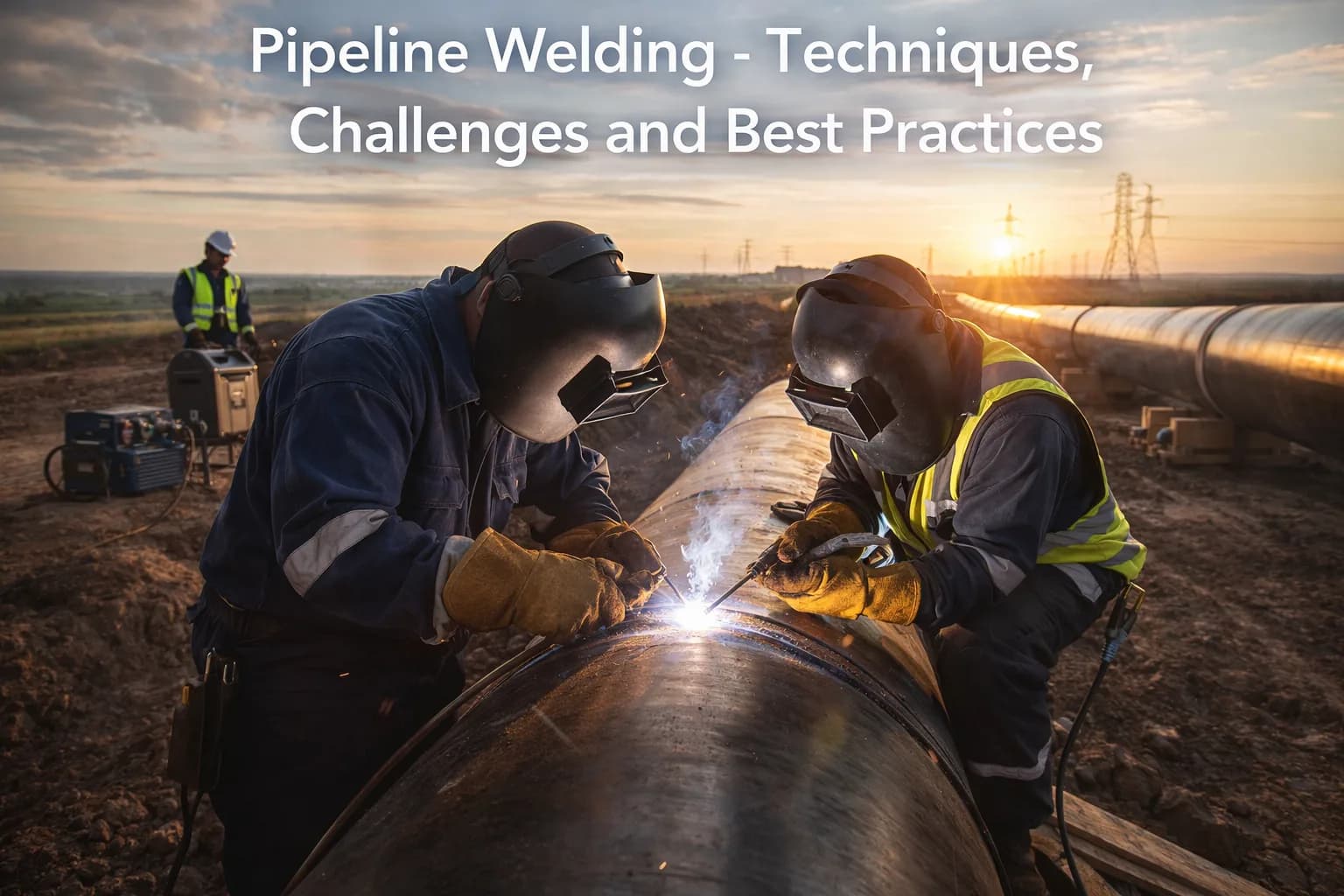
An In-depth Exploration of Techniques, Challenges, and Innovations
Pipeline welding is an essential skill in the construction and maintenance of pipelines that transport a variety of substances, including oil, gas, and water. This intricate process requires precision, expertise, and adherence to safety standards to ensure the integrity and longevity of the pipelines that serve as vital arteries in various industries.
The Importance of Pipeline Welding
Pipelines are the backbone of the energy and water supply networks, spanning vast distances to connect production sites with consumers. Welding plays a pivotal role in joining the sections of these pipelines, ensuring that they can withstand high pressures, temperature variations, and environmental stresses without leaking or failing. A well-executed weld provides a seamless, robust connection that maintains the pipeline’s efficiency and safety.
Types of Pipeline Welding Techniques
Pipeline welding encompasses several techniques, each suited for specific applications and environments. The choice of technique depends on factors such as the material being welded, the pipeline’s location, and the working conditions.
Shielded Metal Arc Welding (SMAW)
Also known as stick welding, SMAW is one of the most common methods used in pipeline welding. This technique involves an electric arc generated between a consumable electrode and the workpiece. The electrode melts, forming a weld pool that cools and solidifies to create the joint. SMAW is versatile and can be used in various positions, making it suitable for fieldwork.
Gas Tungsten Arc Welding (GTAW)
GTAW, or TIG (tungsten inert gas) welding, employs a non-consumable tungsten electrode to produce the weld. An inert gas, usually argon, shields the weld area from atmospheric contamination. This method provides high-quality welds with excellent control over the weld pool, making it ideal for welding thin-walled pipelines and materials like stainless steel and aluminium.
Flux-Cored Arc Welding (FCAW)
FCAW uses a continuous wire electrode with a flux core that generates a protective gas shield during welding. This technique offers high deposition rates and is effective for welding thicker materials in various positions. FCAW is commonly used in both shop and field settings.
Submerged Arc Welding (SAW)
In SAW, the weld is formed under a blanket of granular flux, which prevents contamination and stabilizes the arc. This method is highly efficient, producing deep penetration and high-quality welds. It is typically used for welding large-diameter pipelines and in automated welding applications.
Challenges in Pipeline Welding
Pipeline welding presents several challenges that welders must navigate to achieve optimal results. These challenges include:
Environmental Conditions
Welding pipelines in the field often means working in harsh weather conditions, such as extreme cold, heat, or rain. Welders must adapt their techniques and equipment to ensure consistent quality despite these variables.
Material Variability
Pipelines can be made from various materials, including carbon steel, stainless steel, and alloy steel. Each material has unique properties that influence the welding process, requiring welders to have a deep understanding of metallurgical principles to prevent defects like cracking or corrosion.
Joint Accessibility
Pipeline welders frequently work in confined spaces or at heights, making accessibility a significant concern. Proper planning and the use of specialized tools and techniques are essential to reach and weld joints effectively.
Quality Control
Ensuring the integrity of welds is crucial, as even minor defects can lead to catastrophic failures. Non-destructive testing (NDT) methods, such as ultrasonic testing, radiography, and magnetic particle inspection, are employed to detect flaws and verify the quality of welds.
Innovations in Pipeline Welding
Advancements in technology and techniques continue to enhance the pipeline welding industry, improving efficiency, safety, and weld quality.
Automated and Robotic Welding
The adoption of automated and robotic welding systems has revolutionized the industry, offering consistent weld quality and increased productivity. These systems can be programmed to perform complex welds with precision, reducing the reliance on manual labor and minimizing human error.
Advanced Welding Materials
New electrode and filler materials have been developed to improve weld properties and performance. These materials are designed to enhance toughness, resistance to corrosion, and compatibility with different pipeline compositions, extending the lifespan of welded joints.
Real-Time Monitoring and Control
Innovative monitoring systems now allow for real-time assessment of welding parameters, such as temperature, voltage, and current. This data-driven approach enables immediate adjustments to ensure optimal welding conditions and prevent defects.
Remote Welding Technologies
Remote welding technologies, such as those using drones or remotely operated vehicles (ROVs), are emerging as valuable tools for inspecting and repairing pipelines in challenging or hazardous environments. These technologies enhance safety by reducing the need for human intervention in dangerous conditions.
Conclusion
Pipeline welding is a critical component of the infrastructure that supports modern civilization. The skilled welders who master this craft ensure the safe and efficient transport of essential resources across vast distances. As technology continues to evolve, the future of pipeline welding promises even greater advancements in precision, efficiency, and safety, securing the reliability of these vital lifelines for generations to come.